Loading case study


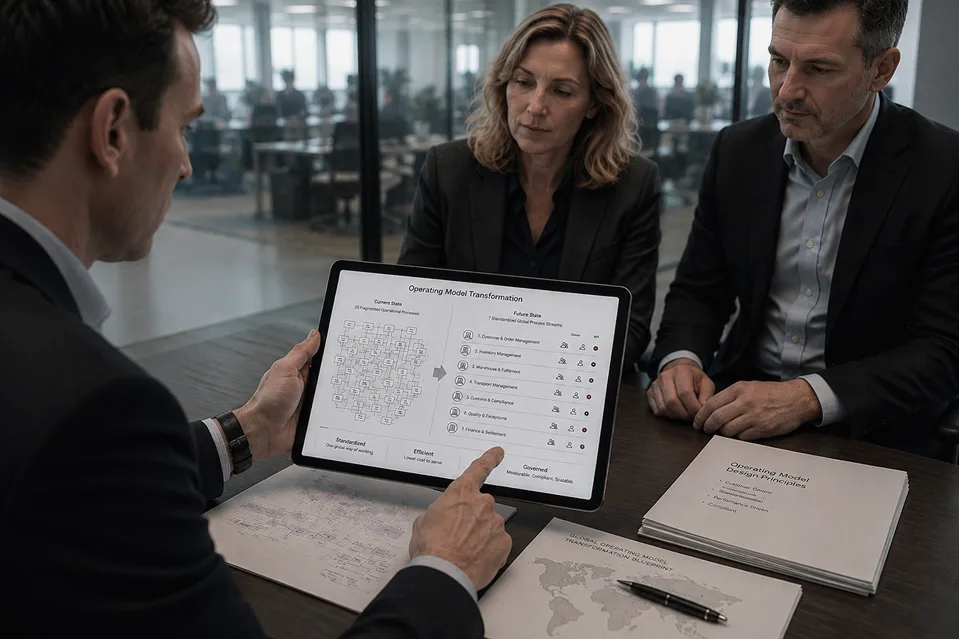
A leading UK-based life sciences logistics provider partnered with Technossus to redesign its global operational processes and establish a standardized business transformation roadmap. Through a collaborative process transformation engagement, Technossus rationalized complex logistics workflows, developed a future-ready operating model, and identified strategic technology initiatives to improve agility, efficiency, scalability, and governance across global operations.
The client is a leading UK-based life sciences logistics company specializing in temperature-controlled supply chain solutions for the pharmaceutical, biotechnology, and healthcare industries.
Operating 24/7 across 124 countries, the organization delivers GDP-compliant logistics services that support the safe transportation of critical clinical and commercial shipments worldwide.
The client managed highly specialized and time-sensitive shipments across 124 countries, coordinating operations between customers, transport partners, suppliers, customs authorities, and internal teams. Over years of global expansion, operational processes had evolved independently across regions, resulting in fragmented workflows, inconsistent execution, and varying operational standards. This made it increasingly difficult to maintain visibility across the supply chain, enforce standardized ways of working, and deliver a consistent customer experience while supporting business growth.
The organization recognized the need for a comprehensive business transformation initiative that extended beyond process optimization. Existing operations were heavily dependent on manual activities, individual expertise, and disconnected technology systems, limiting collaboration, transparency, and scalability. With 25 operational processes spanning the end-to-end logistics lifecycle, there was no unified global operating model, standardized governance framework, or consistent performance measurement approach. The client sought to rationalize these processes into a streamlined global framework, establish clearly defined KPIs and governance mechanisms, and develop a strategic technology roadmap that would improve operational efficiency while creating a scalable foundation for future digital transformation initiatives.
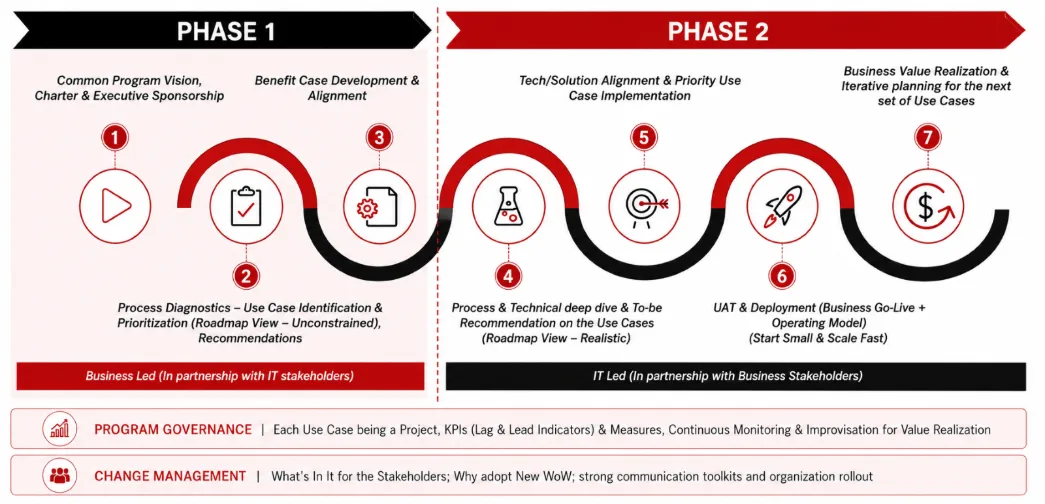
Technossus partnered with the client to deliver a comprehensive business process transformation program focused on standardizing global operations, improving process efficiency, and establishing a scalable operating model for future growth. Working closely with business and technology stakeholders, the engagement combined process consulting, operating model design, governance, and technology initiatives to create a transformation roadmap that aligned business objectives with long-term digital initiatives.
The engagement began with a detailed assessment of the client's existing operational landscape. Through stakeholder workshops, process walkthroughs, and collaborative discovery sessions, Technossus documented the existing ("As-Is") logistics workflows, identified operational bottlenecks, mapped interdependencies across business functions, and established a comprehensive process taxonomy covering the organization's end-to-end logistics operations.
Following the assessment, Technossus redesigned the operational landscape by consolidating 25 business processes into 7 standardized global process streams. Detailed future-state ("To-Be") process blueprints were developed to establish consistent workflows, eliminate process duplication, define clear ownership, and improve collaboration across global teams. The redesigned operating model introduced standardized governance, process documentation standards, and clearly defined KPIs to support consistent execution across regions.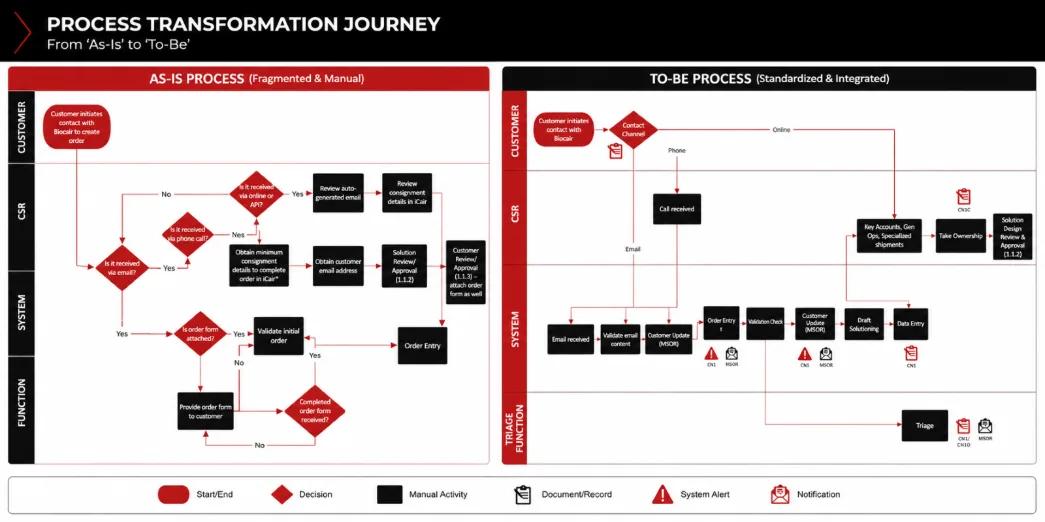
To ensure long-term scalability, Technossus conducted a comprehensive technology assessment alongside the process redesign. Existing applications, integration points, and operational workflows were evaluated to identify opportunities for modernization. The engagement resulted in a phased technology roadmap that prioritized initiatives such as workflow automation, API-led integrations, customer self-service capabilities, master data management, inventory visibility, and enhanced data governance. A set of 10 strategic Business–IT initiatives were identified and prioritized to support all future digital transformation objectives.
Beyond strategic consulting, Technossus actively contributed to the implementation of key business initiatives. The team collaborated on the design and development of the client's Customer Portal and Chatbot solution, enabling improved customer engagement and self-service capabilities. In parallel, Technossus worked closely with business and IT teams to enhance their platform through user story refinement, solution design, development, testing, and delivery of business-critical process improvements, ensuring that the transformation roadmap translated into tangible operational capabilities.
Recognizing that successful transformation extends beyond technology, Technossus developed a structured implementation framework to support global rollout. This included governance models, change management strategies, operating model readiness assessments, KPI frameworks, process toolkits, and phased implementation plans. The program provided the customer with a practical execution blueprint, enabling leadership to implement standardized processes, align stakeholders, and realize business value through a controlled and scalable transformation journey.
Bring us the workflow, platform, or delivery problem that is slowing your team down.